
The use of gemstones and crystals for health purposes has been a topic of interest for thousands of years, with bloodstone and agate being among the most commonly referenced stones in traditional healing practices. Many people wonder whether wearing a bloodstone and agate bracelet can provide genuine benefits for blood health, and this question deserves a thoughtful examination of both historical context and modern scientific understanding.
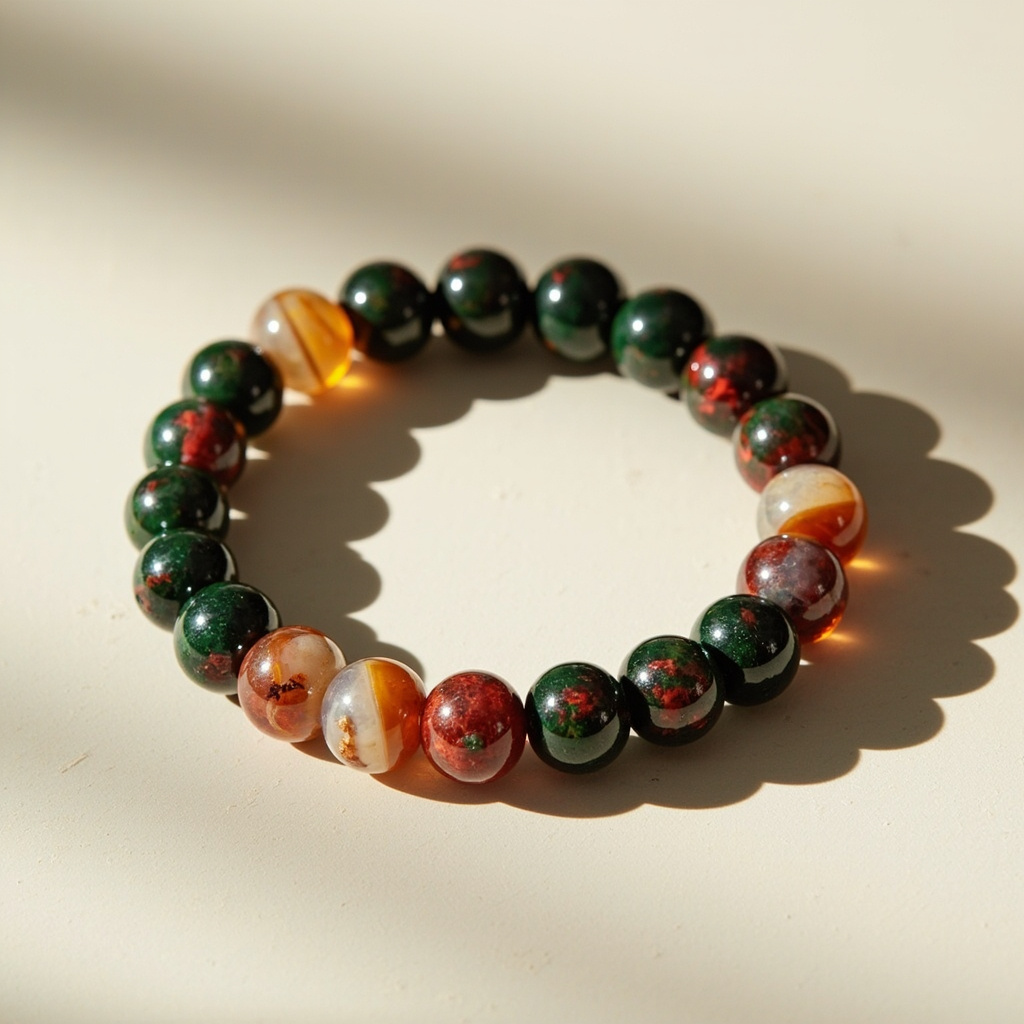
Bloodstone, also known as heliotrope, is a form of jasper that typically displays a deep green color with distinctive red or brown spots that resemble blood, hence its name. This stone has been valued since ancient times, with the Greeks and Romans believing it could stop bleeding and promote vitality. Ancient warriors often carried bloodstone amulets into battle, believing the gem would grant them courage and protect them from wounds. The deep green and red coloring led many cultures to associate bloodstone directly with blood and the life force flowing through the human body.
Agate, on the other hand, is a variety of chalcedony that comes in numerous colors and patterns, including banded formations that many find visually appealing. This stone has been used throughout history in jewelry and decorative objects, with ancient civilizations attributing various protective properties to it. Different types of agate have been associated with different benefits, but overall, agate has been considered a stabilizing and strengthening stone that promotes emotional balance and physical well-being.
The idea that wearing a bloodstone bracelet might help with blood health stems largely from the principle of sympathetic magic, where objects resembling something are believed to influence that thing. The red spots on bloodstone resembling drops of blood led ancient peoples to conclude that the stone could affect blood-related conditions. This traditional belief has persisted through the centuries and continues to influence modern crystal healing practices, where practitioners recommend bloodstone for issues related to blood circulation, menstruation, and wound healing.
Similarly, proponents of agate bracelet wearing suggest that this stone can promote better blood flow and support the cardiovascular system. Crystal healing advocates claim that agate's balancing properties extend to the blood, helping to regulate blood pressure and improve circulation throughout the body. Some believe that placing crystals on specific parts of the body can direct energy flows and promote healing in those areas.
It is important to understand that these claims are not supported by rigorous scientific evidence. Modern medicine recognizes that blood health is influenced by numerous factors including genetics, diet, exercise, and medical conditions, and these factors cannot be meaningfully altered by wearing gemstone jewelry. The human circulatory system operates according to biological and physiological principles that have been extensively studied and documented by medical science, and there is no known mechanism by which gemstones could influence blood cells, blood vessels, or blood chemistry when worn on the wrist.
From a scientific perspective, gemstones are simply mineral formations with specific chemical compositions and crystalline structures. While they are certainly beautiful and can have aesthetic and psychological value, they do not emit any known energy fields or wavelengths that could affect human biology when worn as jewelry. The atoms and molecules in a gemstone remain relatively inert when in contact with skin, and any claims about their ability to influence health outcomes lack empirical support.
However, this does not mean that wearing crystal bracelets is without any potential benefits. Many people report feeling better when wearing crystals, and this improvement likely comes from psychological and placebo effects rather than any physical property of the stones themselves. The act of wearing a meaningful piece of jewelry, believing in its protective qualities, and taking time to focus on personal wellness can have genuine positive effects on mental state and stress levels, which in turn may have secondary benefits for overall health.
Stress reduction is worth considering in this context, as chronic stress can negatively impact blood pressure and cardiovascular health over time. If wearing a bloodstone bracelet or agate bracelet helps someone feel more centered and less anxious, this psychological benefit could theoretically contribute to better health outcomes, though the mechanism would be indirect and related to stress management rather than any inherent property of the stones.
For those interested in genuinely supporting their blood health, medical professionals recommend focusing on evidence-based approaches. These include maintaining a balanced diet rich in iron and other essential nutrients, engaging in regular physical activity, avoiding tobacco products, limiting alcohol consumption, and managing stress through proven techniques such as meditation, exercise, or counseling. Regular medical check-ups can help identify any blood-related concerns early, allowing for prompt treatment when necessary.
In conclusion, while the historical and cultural significance of bloodstone and agate is fascinating, there is no scientific basis for believing that wearing these gemstones as bracelets can directly improve blood health. The enduring appeal of crystal healing lies in its psychological and aesthetic dimensions rather than any measurable physical effect on the body. People who enjoy wearing crystal bracelets can continue to appreciate their beauty and personal meaning while maintaining realistic expectations about what they can and cannot accomplish for their health.