
A fake agate geode pendant can be a convincing copy at first glance, especially when the surface is polished and the colors look vivid. Because agate is a naturally banded variety of chalcedony, its internal structure is unique, and replicating that intricate layering is difficult for mass‑produced fakes. Understanding the basic properties of authentic agate is the first step toward spotting an impostor.
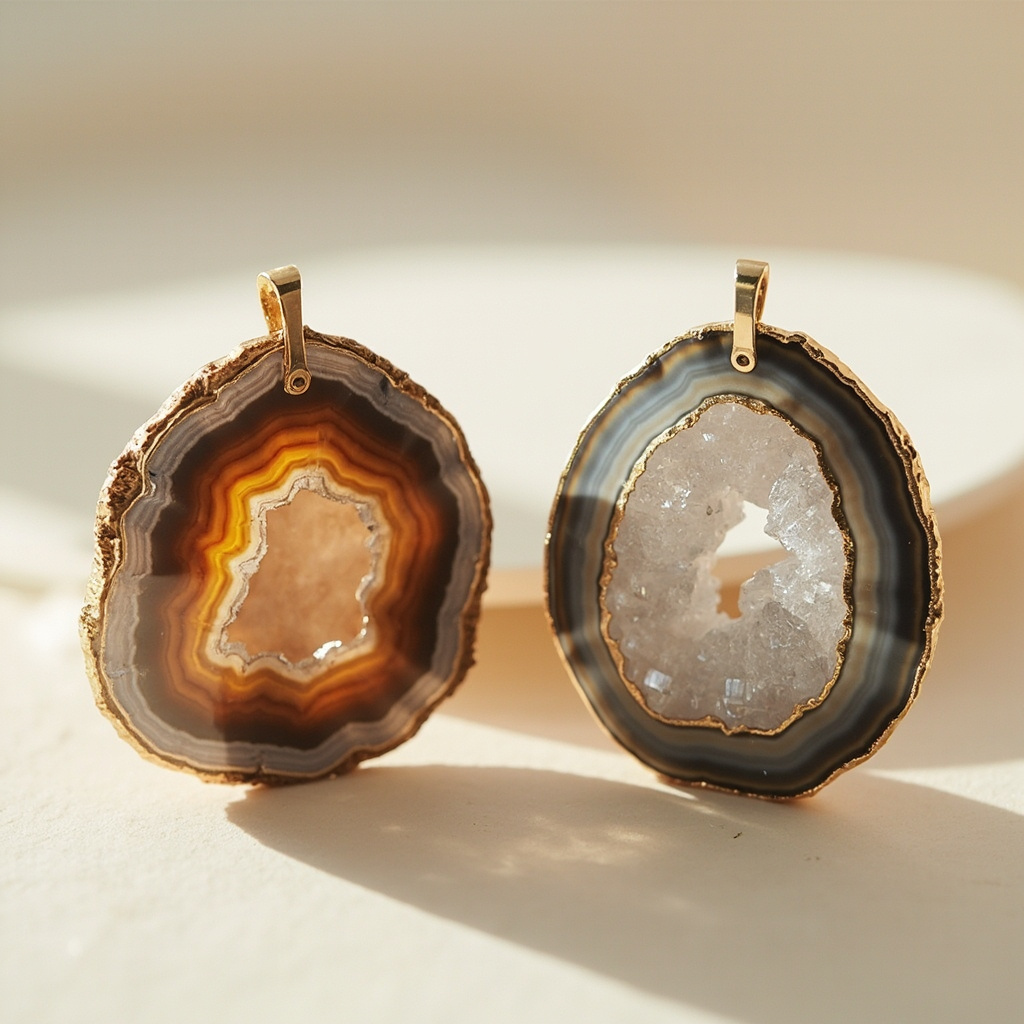
authentic agate forms from silica deposits in volcanic rock cavities, creating distinct, parallel bands that often show subtle color transitions. These bands are rarely perfectly straight and may exhibit slight irregularities, tiny inclusions, or micro‑cracks that give the stone a natural, organic feel. By contrast, synthetic or dyed stones usually display overly uniform patterns or a “painted‑on” look.
When you pick up a geode pendant, notice its weight relative to size. Real agate is denser than many plastics, resins, or glass used in fakes. A genuine piece will feel noticeably heavier in the hand, while a counterfeit will often be surprisingly light. A quick comparison with a known authentic pendant of similar dimensions can help you gauge the expected heft.
Temperature is another subtle indicator. Agate tends to stay cool to the touch for a few seconds after being held, whereas many man‑made imitations quickly adapt to skin temperature. If the stone warms up almost instantly, it may be made of resin or plastic.
Inspect the surface texture under good lighting. Genuine agate has a smooth but slightly granular finish, often with tiny pits or natural imperfections that reflect light in a soft, diffused way. Fakes often have a glossy, overly smooth surface that looks artificially polished, or they may show faint air bubbles trapped in resin.
The interior of a geode is where the true nature of the stone is revealed. If the pendant is open‑backed, look for a cavity that shows natural crystal growth or a mosaic of tiny quartz points. In a fake, the cavity may be filled with a uniform, glossy resin or a simple painted pattern lacking true depth.
Shine a flashlight or a strong LED through the stone. Authentic agate transmits light with a soft, warm glow and may reveal faint internal banding or subtle color variations. A counterfeit often blocks light unevenly, showing bright spots where the resin is thicker or a uniform opaque appearance.
Use a UV (blacklight) lamp to test fluorescence. Most natural agates show little to no reaction under UV light, appearing dull or faintly fluorescent. Some fakes, especially those dyed with fluorescent pigments, will glow brightly in blues, greens, or purples, signaling an artificial treatment.
A jeweler’s loupe or a simple 10x magnifier can reveal surface and internal details that are invisible to the naked eye. Look for tiny mineral crystals, growth lines, or micro‑fractures that are characteristic of natural stone. In contrast, plastic or resin imitations may show smooth internal walls, air bubbles, or a lack of any crystalline structure.
Price can be a red flag. Agate geodes, especially those with vibrant colors and well‑formed cavities, are not cheap. If a pendant is being sold at a fraction of the market price, it is likely a replica. Always compare the asking price with reputable sources to gauge authenticity.
Ask for provenance and documentation. A trustworthy seller should be able to provide information about the source of the stone, including the region where the agate was mined and any certifications of authenticity. Lack of such details or vague descriptions often accompanies fakes.
If you are still uncertain, consider seeking a professional appraisal. A gemologist can perform specific gravity tests, refractometer readings, and microscopic examinations that definitively distinguish genuine agate from imitation materials.
In summary, spotting a fake agate geode pendant involves a combination of visual inspection, tactile evaluation, simple home tests, and market awareness. By paying attention to banding consistency, weight, temperature response, surface texture, internal cavity characteristics, light transmission, UV fluorescence, and price, you can protect yourself from purchasing an inauthentic piece. Trust your observations, and when in doubt, consult an expert to confirm the true nature of your gemstone.