
A jade bangle is more than a decorative accessory; it is a piece of art that should sit comfortably on your wrist for years. If the bangle is too small, it can pinch the skin or cause pressure marks, while one that is too large may slide off or bang against surfaces, risking chips or cracks. Understanding how to match the bangle’s internal diameter to your own wrist dimensions is the first step toward a perfect fit. The process starts with a simple, accurate measurement of your wrist, followed by a conversion to the standard sizes used by jewelers.
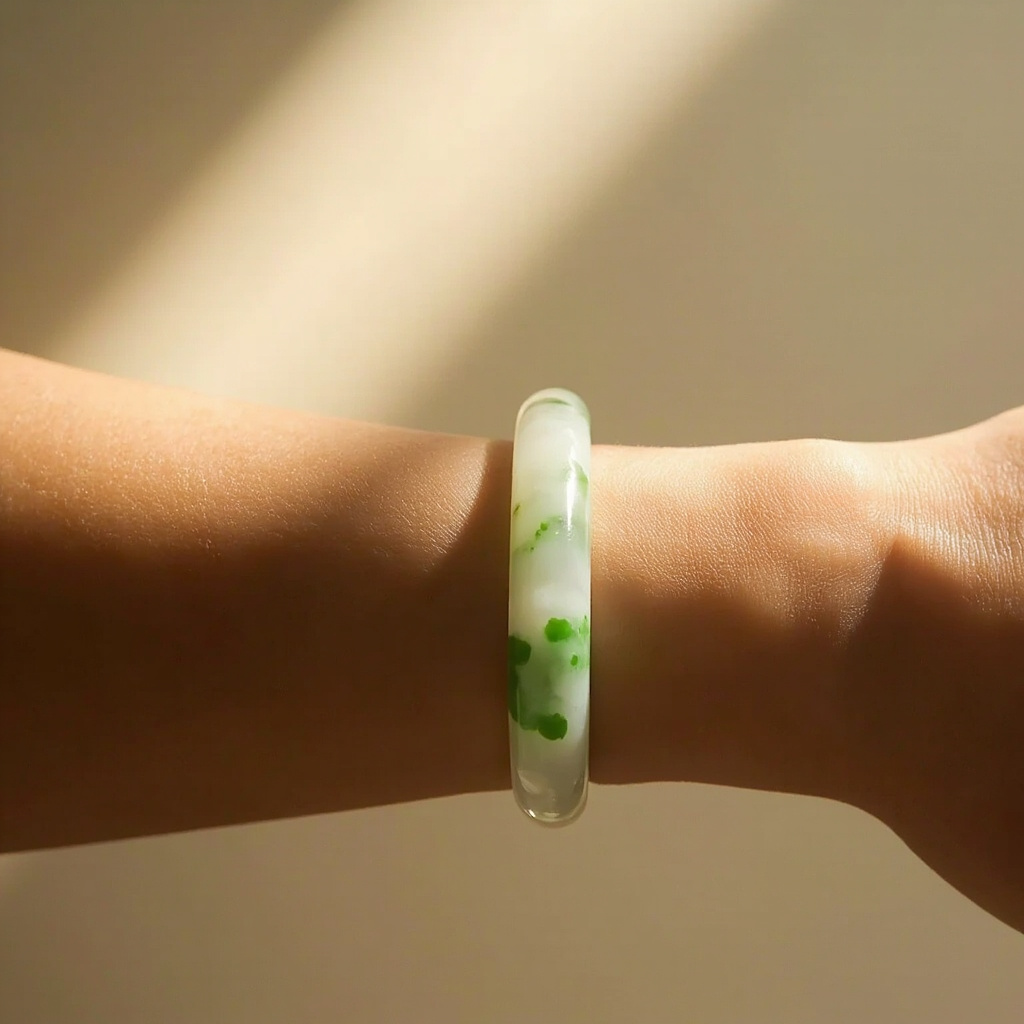
Before you visit a store or browse online listings, you need to know your exact wrist size. Use a flexible measuring tape, a piece of string, or even a strip of paper. Wrap it around the widest part of your wrist, just below the bony protrusion of the ulna, keeping the tape snug but not tight. Note the point where the measuring tool meets the starting point, then lay it flat against a ruler to get the circumference in centimeters or inches. This straightforward step eliminates guesswork and prevents the common mistake of ordering a bangle that will not fit.
The measurement you record should be recorded as a circumference, but most bangle sizes are quoted by their internal diameter. To translate your circumference into a diameter, divide the measurement by π (approximately 3.14). For example, a wrist circumference of 16 cm yields an internal diameter of roughly 5.1 cm. Many retailers round this figure to the nearest half‑centimeter, creating a set of standard sizes such as 52 mm, 54 mm, 56 mm, and so on. When you have the calculated diameter, you can compare it directly to the bangle’s listed size to see if it matches your needs.
It is important to add a small allowance for comfort. Jade is a relatively hard material, but it does not stretch. A bangle that fits exactly to the calculated diameter may feel snug when you first put it on and could become uncomfortable after a full day of wear. Adding about 2–3 mm to the internal diameter provides enough room to slide the bangle over the hand without excessive pressure, while still keeping it secure on the wrist. Some wearers prefer an even looser fit for a relaxed look, especially if they plan to wear the bangle on a daily basis.
The width of the bangle also influences how it sits on the wrist. A narrow bangle, perhaps 5 mm wide, will feel different from a wide cuff that spans 15 mm or more. Wider bangles distribute pressure over a larger area, which can make a slightly tighter fit more tolerable. However, they also require more clearance when sliding on and off, so you may need to increase the diameter allowance accordingly. If you have a preference for a specific style, test how each width feels before committing to a size.
Jade comes in two main varieties, Nephrite and Jadeite, each with distinct hardness and flexibility. Nephrite is slightly softer and can have a subtle give, meaning a bangle made from Nephrite may accommodate a marginally tighter fit. Jadeite is denser and offers less flexibility, so it tends to demand a more precise size match. Regardless of the type, always handle the stone gently when trying it on to avoid accidental impacts that could cause fractures.
When trying a bangle in person, slide it over the hand and wrist using a gentle, consistent motion. Do not force it; if resistance is felt, the bangle is likely too small. The ideal fit allows the bangle to rest comfortably just above the wrist bone, rotating freely without pinching the skin. If the bangle slides too easily, it may be too large, and you should consider a smaller diameter or a style with a more pronounced curve.
Consider the environment in which you will wear the bangle. Temperature changes can cause the skin to expand or contract, especially during hot summer days or cold winter mornings. If you live in a climate with high humidity, you may notice slight swelling of the wrist, so a slightly looser fit can be beneficial. Conversely, in dry, cold conditions the wrist may shrink slightly, and a snugger fit might feel perfect. Adjust your size choice based on the typical conditions you expect to encounter.
Caring for your jade bangle also contributes to its longevity. Avoid exposing it to harsh chemicals, ultrasonic cleaners, or sudden temperature swings. When not wearing it, store the bangle in a soft pouch to protect it from scratches. If the bangle feels tight after long periods of wear, gently massage the wrist and allow the skin to relax before re‑inserting the bangle. Never use excessive force, as this can damage the jade or cause it to crack.
Finally, trust your instincts. If a bangle feels uncomfortable or looks awkward on your wrist, it is unlikely the right choice, regardless of its price or popularity. When in doubt, seek advice from a knowledgeable jeweler who can provide accurate sizing and recommend adjustments such as custom polishing to achieve the perfect fit. With careful measurement, thoughtful selection, and proper care, your jade bangle will become a comfortable, timeless addition to your collection.