
When couples search for wedding rings, they often explore alternatives to traditional diamonds due to budget considerations or ethical preferences. Two popular options that frequently emerge in this search are moissanite and cubic zirconia. Both stones offer remarkable sparkle and beauty, but they possess distinct characteristics that make each suitable for different needs and preferences. Understanding these differences is essential for making an informed decision about your wedding jewelry.
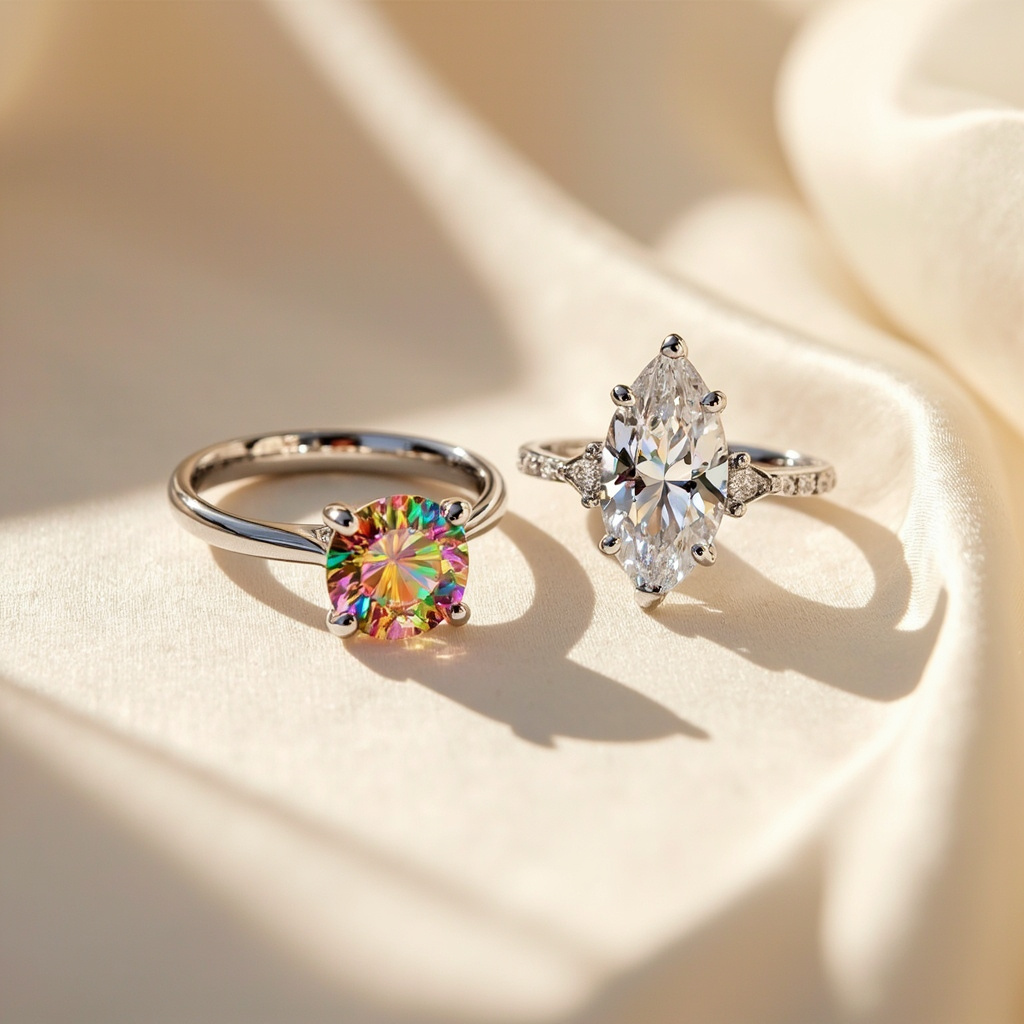
Moissanite is a gemstone that was first discovered in a meteor crater, giving it a cosmic origin story that appeals to romantics. Today, nearly all moissanite available on the market is created in laboratories, ensuring consistent quality and ethical production. This stone ranks 9.25 on the Mohs scale of hardness, making it one of the hardest substances used in jewelry. Its exceptional durability means that moissanite rings can withstand daily wear without scratching or losing their polish, which is crucial for a piece of jewelry meant to last a lifetime.
Cubic zirconia, commonly referred to as CZ, is a synthesized form of zirconium dioxide. It became popular in the 1970s as a diamond simulant and has since become a staple in affordable jewelry. While cubic zirconia ranks 8 to 8.5 on the Mohs scale, it is significantly softer than moissanite. This difference in hardness affects the stone is long-term durability, as cubic zirconia may show signs of wear over years of daily use. However, for occasional wear or fashion jewelry, cubic zirconia remains an attractive option.
The optical properties of these two stones differ noticeably to trained eyes. Moissanite exhibits a higher refractive index than cubic zirconia, meaning it bends light more effectively and produces more brilliance. Many people describe moissanite is having a rainbow-like fire that catches light beautifully. Cubic zirconia, while still brilliant, tends to have a more standard sparkle that closely mimics diamond but lacks the distinctive optical characteristics that set moissanite apart.
Color is another factor where these stones diverge. High-quality moissanite is typically graded as near colorless, though some stones may display a subtle yellow or gray tint in certain lighting conditions. Cubic zirconia can be produced in completely colorless form, offering a pristine appearance that rivals the highest quality diamonds. However, cubic zirconia may develop a cloudy appearance over time, particularly if exposed to oils or chemicals, while moissanite maintains its clarity throughout its lifespan.
Price represents one of the most significant differences between these two options. Cubic zirconia rings are generally the most affordable choice, often costing a fraction of comparable diamond or moissanite pieces. Moissanite falls somewhere between cubic zirconia and diamond in terms of price, offering excellent value for those seeking durability and beauty without the diamond price tag. The investment in moissanite often makes sense for wedding rings because the stone will maintain its appearance for decades, whereas cubic zirconia may need replacement after several years of daily wear.
Ethical considerations also influence many couples is choices today. Moissanite is universally recognized as an ethical choice because it is created in controlled laboratory environments without any mining. Cubic zirconia shares this benefit, as it is also produced synthetically. Both options provide peace of mind for couples concerned about the environmental and social impact of mining practices.
When deciding between moissanite and cubic zirconia for wedding rings, consider your lifestyle, budget, and priorities. If you seek a durable stone that will remain beautiful for decades and do not mind spending more, moissanite is the superior choice. Its hardness ensures longevity, and its unique optical properties create a stunning visual impact that many find even more captivating than diamonds.
If budget is your primary concern and you do not plan to wear the ring daily, cubic zirconia offers an attractive alternative. It provides immediate gratification without straining your finances. However, be prepared for the possibility of replacing the stone eventually if wear becomes noticeable.
Ultimately, both moissanite and cubic zirconia have earned their place as legitimate alternatives to traditional diamonds. The best choice depends on your individual circumstances and what you value most in your wedding ring. Many couples find that the additional investment in moissanite pays dividends in longevity and satisfaction, while others appreciate the accessibility of cubic zirconia. Whatever you choose, both stones can symbolize your love beautifully without compromising on appearance or ethics.