
Anyone shopping for a pair of earrings that will survive daily handling soon confronts the question of material strength. In the world of natural stone jewelry, agate and crystal are two popular options that often appear side by side in display cases. While both can be cut into elegant drops, teardrops, or geometric studs, their underlying mineral properties differ in ways that affect how they stand up to impact, scratching, and environmental exposure. Understanding these differences can spare a buyer from the disappointment of a cracked gem or a dulled surface after only a few weeks of wear.
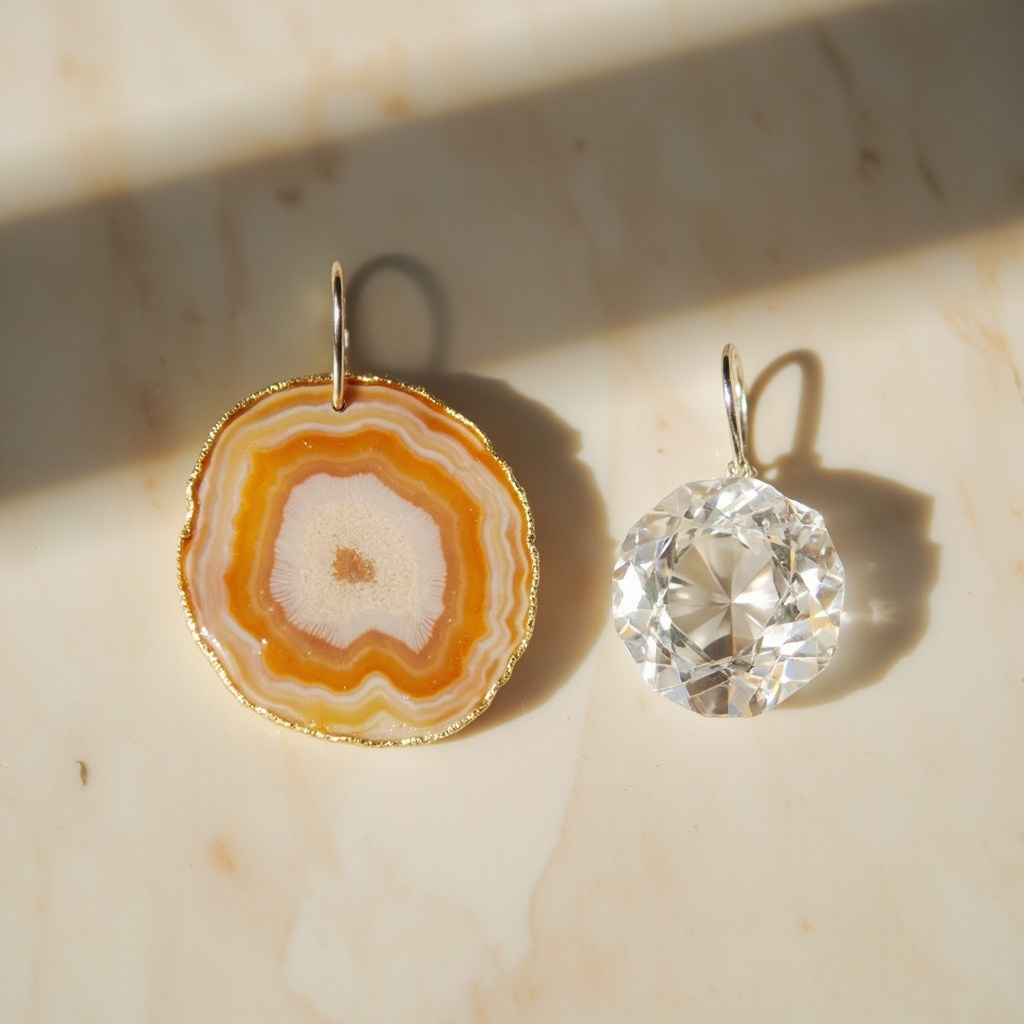
Agate is a variety of chalcedony, a microcrystalline form of silica that forms in volcanic cavities and nodules. Its structure is made up of tiny interlocking quartz fibers that create a dense, tightly packed network. This arrangement gives agate a relatively high hardness of 6.5 to 7 on the Mohs scale, similar to quartz, and provides excellent toughness because the fibers bind together, resisting fracture propagation. Agate is also non‑porous when polished, meaning it does not readily absorb liquids, sweat, or perfumes that can weaken other materials over time. The stone’s natural banding can hide minor scratches, making it look newer longer even after regular use.
Crystal, in the context of jewelry, is a broader term that can refer to clear quartz, synthetic glass, or even man‑made crystal such as Swarovski elements. Natural quartz crystals rank about 7 on the Mohs scale, offering good scratch resistance, but they are often cut as faceted gems that can be more brittle than agate. Synthetic glass crystals have a hardness of around 5 to 6 and are more prone to chipping if struck at a sharp angle. The clarity that makes crystal earrings visually striking can also reveal internal inclusions or fractures that weaken the stone’s structural integrity. Because many crystal pieces are glued into metal settings rather than set directly, the adhesive bond can become a point of failure under stress.
Durability is best assessed by looking at three key metrics: hardness, toughness, and resistance to chemicals. Hardness determines how well a surface resists scratching from everyday contact with skin, hair, or metal clasps. Toughness measures a material’s ability to absorb energy without cracking, which is crucial for earrings that may be bumped or dropped. Porosity influences how quickly a material can be damaged by sweat, lotions, or cleaning agents. Agate’s dense microstructure gives it an advantage in all three areas, making it less likely to scratch, chip, or discolor with routine exposure. Crystal’s performance varies widely depending on whether it is natural quartz, glass, or a treated composite, but generally it sits slightly below agate on the toughness scale.
When choosing earrings for specific lifestyles, practical considerations often outweigh theoretical durability ratings. For active individuals who wear jewelry while exercising, swimming, or doing manual tasks, agate’s resilience reduces the risk of sudden breakage. Its resistance to moisture also means it can be cleaned with mild soap without worrying about damage. Crystal earrings, on the other hand, excel in formal or decorative settings where impact is minimal and the sparkle of a clear stone is prioritized. In such contexts, a crystal piece may be mounted in protective settings that cushion blows, mitigating its lower toughness. Those who prefer lightweight accessories may also favor crystal because it often weighs less than a comparable size agate, but they should be aware that the trade‑off is reduced durability.
Maintenance habits play a decisive role in extending the life of either material. Agate earrings benefit from occasional polishing with a soft cloth to maintain their glossy finish, and they can be soaked in warm water with a drop of neutral detergent for deeper cleaning. Avoid harsh chemicals such as bleach or ultrasonic cleaners, as these can erode the stone’s surface over time. Crystal earrings should be wiped gently with a damp cloth; exposing them to strong solvents can dissolve the adhesive used in many crystal‑in‑metal designs. Storing both types in separate pouches prevents them from scratching each other or being knocked against harder surfaces. By adopting these simple care routines, owners can preserve the appearance and structural integrity of their earrings for years.
In summary, both agate and crystal can serve as durable choices for earrings when matched to appropriate use cases. Agate offers superior hardness, toughness, and chemical resistance, making it the more resilient option for everyday wear. Crystal provides brilliant visual appeal and lighter weight, ideal for occasional or dressy occasions, but it requires more careful handling to avoid chips or adhesive failure. For most people seeking a long‑lasting pair of earrings that can withstand the rigors of daily life, agate is generally the safer and more reliable material. However, the final decision should also consider personal style, comfort, and the specific setting in which the earrings will be worn.