
Agate is a beautiful and versatile gemstone that has been treasured for thousands of years. It belongs to the chalcedony family and is known for its distinctive banded patterns and wide range of natural colors. When shopping for agate, you will encounter two main varieties: natural agate and dyed agate. Understanding the difference between these two types is essential for anyone interested in purchasing this popular gemstone.
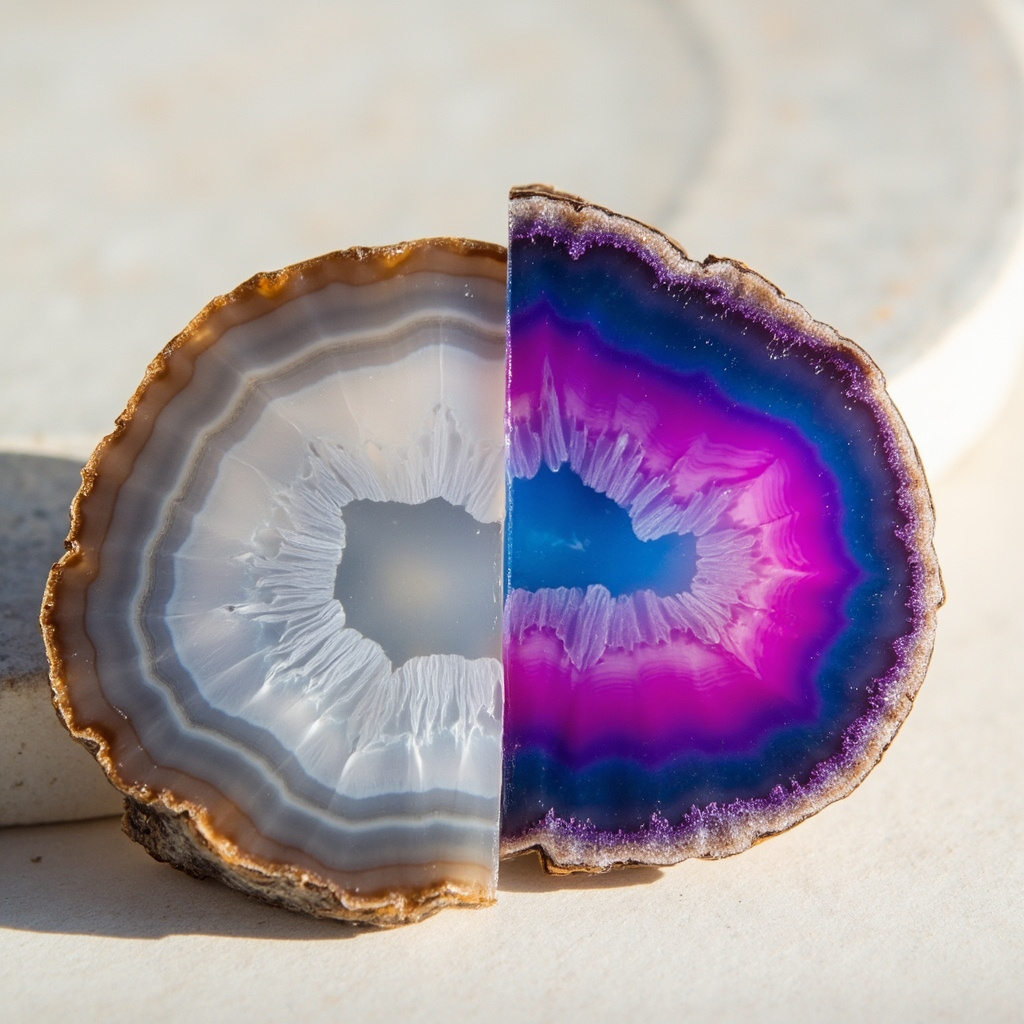
Natural agate forms deep within the Earth through a slow geological process that takes millions of years. It develops when silica-rich water fills cavities in volcanic rocks and gradually deposits layers of mineral crystals. These layers create the characteristic bands that make agate so distinctive and visually appealing. The colors in natural agate result from various mineral impurities present during formation, including iron, manganese, and chromium. Each piece of natural agate is unique, with patterns and colors that cannot be exactly replicated by human intervention.
Dyed agate, on the other hand, is natural agate that has been treated with chemical dyes to enhance its appearance or create colors that rarely occur in nature. The dyeing process involves soaking porous agate pieces in colored solutions, often for extended periods, to allow the dye to penetrate the stone. Common colors achieved through dyeing include vibrant blues, greens, purples, and pinks. These enhanced stones are popular in the jewelry industry because they offer eye-catching colors at more affordable prices than rare naturally colored specimens.
The visual differences between natural and dyed agate are often noticeable upon close inspection. Natural agate typically displays softer, more muted colors that blend gradually into one another. The bands in natural agate tend to have a more organic, flowing appearance. Dyed agate, conversely, often shows more vibrant and uniform colors that may appear artificially bright or concentrated along the band lines. In heavily dyed specimens, you might notice color pooling in certain areas or along fractures in the stone.
When it comes to identifying dyed agate, there are several techniques that experts use. One method involves examining the stone under magnification to look for signs of dye concentration along crack lines or in porous areas. Another technique is the acetone test, where a cotton swab dampened with acetone is gently rubbed on an inconspicuous area of the stone. If the swab picks up color, the agate has likely been dyed. It is important to note that this test should only be performed with permission and should never be used on polished or finished jewelry pieces.
The value difference between natural and dyed agate can be substantial. Natural agate specimens with rare colors or exceptional patterns command higher prices in the market. Colors like natural red agate, also known as carnelian, and natural blue agate are particularly valued and expensive. Dyed agate, while still attractive, typically has lower resale value and is considered more of a fashion material than a collectible gemstone. However, dyed agate makes beautiful and affordable jewelry pieces that allow people to enjoy the beauty of agate without the high cost of rare natural specimens.
The decision between natural and dyed agate ultimately depends on your personal preferences and budget. If you value authenticity, natural beauty, and long-term investment potential, natural agate is the better choice. The unique character of each natural piece and its geological history add to its appeal and value. However, if you are looking for vibrant colors, affordable pricing, and trendy jewelry options, dyed agate offers an attractive alternative.
Both types of agate have their place in the world of gemstones and jewelry making. Natural agate has been used throughout history for decorative purposes, from ancient Egyptian jewelry to medieval religious artifacts. Dyed agate became more common in the nineteenth century when chemical dyes became widely available, and it has since become a staple in fashion jewelry production.
Whether you choose natural or dyed agate, proper care is important to maintain the beauty of your pieces. Natural agate is relatively durable but should still be protected from harsh chemicals and extreme temperature changes. Dyed agate requires extra care because the dye can fade over time when exposed to sunlight or certain chemicals. Storing dyed agate jewelry away from direct sunlight and applying perfume before wearing dyed pieces will help preserve their color and appearance for years to come.