
A druzy agate pendant represents one of the most captivating varieties of gemstone jewelry available today. These pieces combine the natural beauty of agate with the sparkling texture of druzy crystals, resulting in a pendant that catches light in extraordinary ways. Understanding what makes these pendants special and how to protect them helps jewelry lovers make informed decisions about ownership and care.
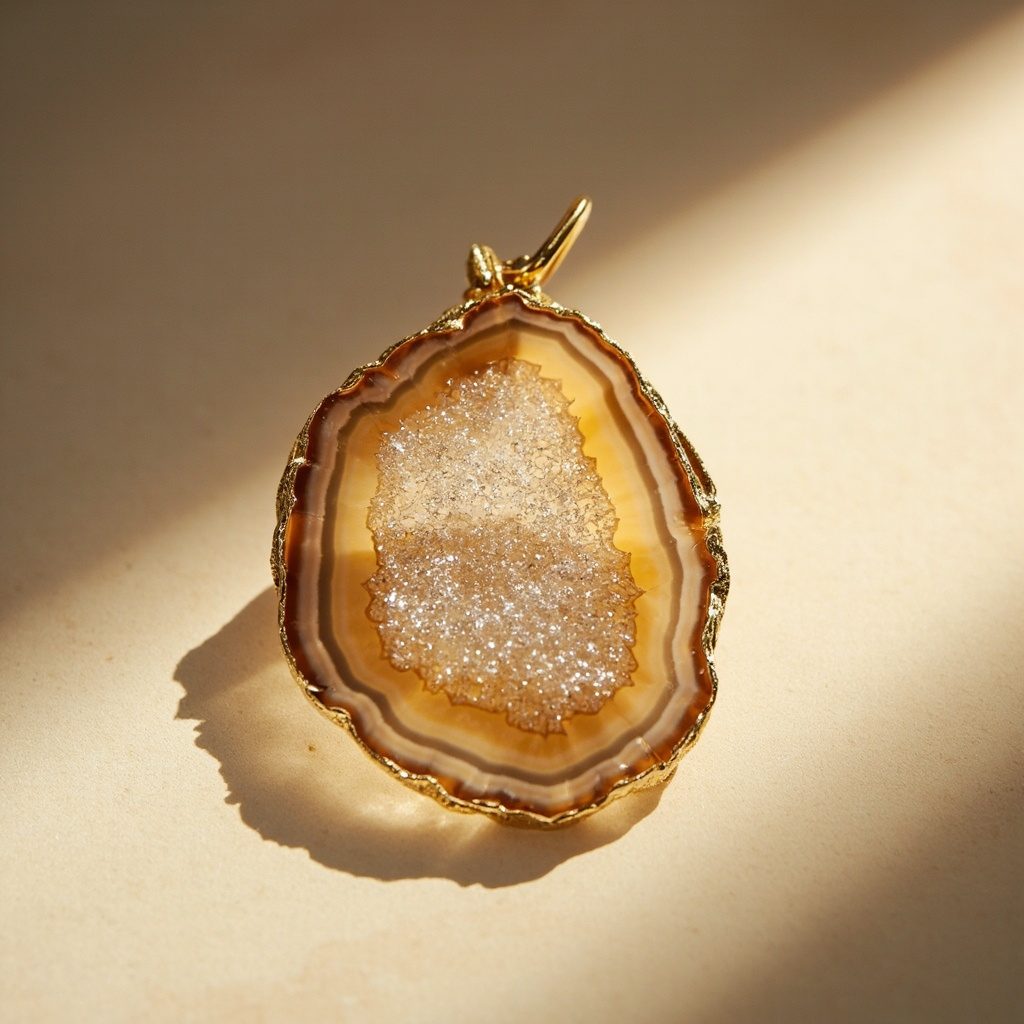
Druzy agate forms through a fascinating geological process that takes millions of years to complete. The journey begins when agate, a form of chalcedony composed of fine interlocking quartz crystals, develops within volcanic rock cavities called vesicles. Over time, mineral-rich water deposits layers of silica within these cavities, gradually building up the distinctive banded structure that agate is known for. Once the agate formation is complete, groundwater carrying dissolved minerals continues to percolate through the stone. As this mineral-rich water evaporates, it leaves behind tiny crystals that coat the surface of the agate, creating what gemologists call druzy.
The term druzy refers specifically to the layer of small crystals that form on the surface of a gemstone. These crystals can form on various stone types, but druzy agate has become particularly prized in jewelry design. The crystals that make up the druzy coating are typically quartz, though other minerals may be present depending on the specific geological conditions. These micro-crystals create a glittering, almost sugary texture that transforms the smooth agate beneath into a surface that sparkles from every angle.
When selecting a druzy agate pendant, the first consideration involves the hardness and durability of the underlying agate. Agate scores between 6.5 and 7 on the Mohs hardness scale, placing it in the same general category as materials like steel. This hardness means the agate itself resists scratching from everyday contact and maintains its polish over time. However, the druzy crystals coating the surface present a different situation entirely.
The druzy crystals that give these pendants their characteristic sparkle are considerably more delicate than the agate beneath. These tiny formations measure fractions of a millimeter and protrude from the surface in delicate clusters. While they are quartz and therefore relatively hard, their small size and fragile attachment to the underlying stone make them vulnerable to certain types of damage. The question of whether a druzy agate pendant is fragile requires understanding this dual nature of the material.
In practical terms, a druzy agate pendant occupies a middle ground between highly durable and truly fragile. The stone can withstand normal wearing conditions without significant risk of damage. Light contact with skin, exposure to air, and normal handling pose minimal threat to a well-made pendant. The real concerns involve impact, abrasion, and exposure to chemicals that could affect either the crystals or any treatments applied to enhance the stone.
Direct impact poses the greatest threat to druzy agate pendants. A sharp blow that might barely scratch a solid steel ring could shatter the delicate druzy crystals from the surface of an agate pendant. Similarly, dropping these pendants onto hard surfaces risks chipping both the exposed crystals and the agate beneath. Jewelry wearers should remove their druzy agate pendants before engaging in physical activities, sports, or any situation where impact might occur.
Chemical exposure represents another significant concern for druzy agate pendant owners. Household cleaning products, perfumes, hairsprays, and cosmetic lotions often contain substances that can damage the stone or dull the sparkle of the druzy crystals. Applying any products containing harsh chemicals near the pendant or allowing the stone to contact such substances risks permanent damage to the crystal surface and any coatings applied by the manufacturer.
Water presents a complex issue for druzy agate pendants. While brief contact with water during washing hands causes no immediate harm, prolonged exposure weakens the bond between druzy crystals and agate. Additionally, many druzy agate pendants feature metallic coatings or settings that can be affected by moisture over time. Best practices suggest removing these pendants before swimming, showering, or engaging in water-related activities.
Proper storage protects druzy agate pendants between wearings. Each pendant deserves its own soft compartment within a jewelry box, separated from other pieces that might scratch the crystal surface. Some owners wrap their pendants in soft cloth for added protection during travel or extended storage periods.
Cleaning these pendants requires gentle approaches that protect the delicate druzy surface. A soft brush, mild soap, and lukewarm water provide the safest method for removing accumulated oils and debris. Harsh cleaning chemicals, ultrasonic cleaners, and steam cleaning should be avoided as these methods can damage or dislodge the crystal coating.
Despite these care requirements, druzy agate pendants remain durable enough for regular wear with appropriate precautions. Thousands of these pendants have served their owners faithfully for decades without significant damage. The key lies in understanding the material's characteristics and respecting its limitations. A druzy agate pendant offers the beauty of natural gemstones combined with unique crystalline sparkle, making it a worthwhile addition to any jewelry collection when handled with reasonable care.