
The resurgence of crystal pendant designs in recent fashion cycles reflects a broader desire for versatile, eye catching accessories that can be mixed and matched with ease. When planning a layered necklace look, a single crystal pendant often serves as the focal point, drawing attention while tying together the various strands of the ensemble. Its clarity, color, and cut can either elevate a simple chain or provide a striking contrast against more textured pieces.
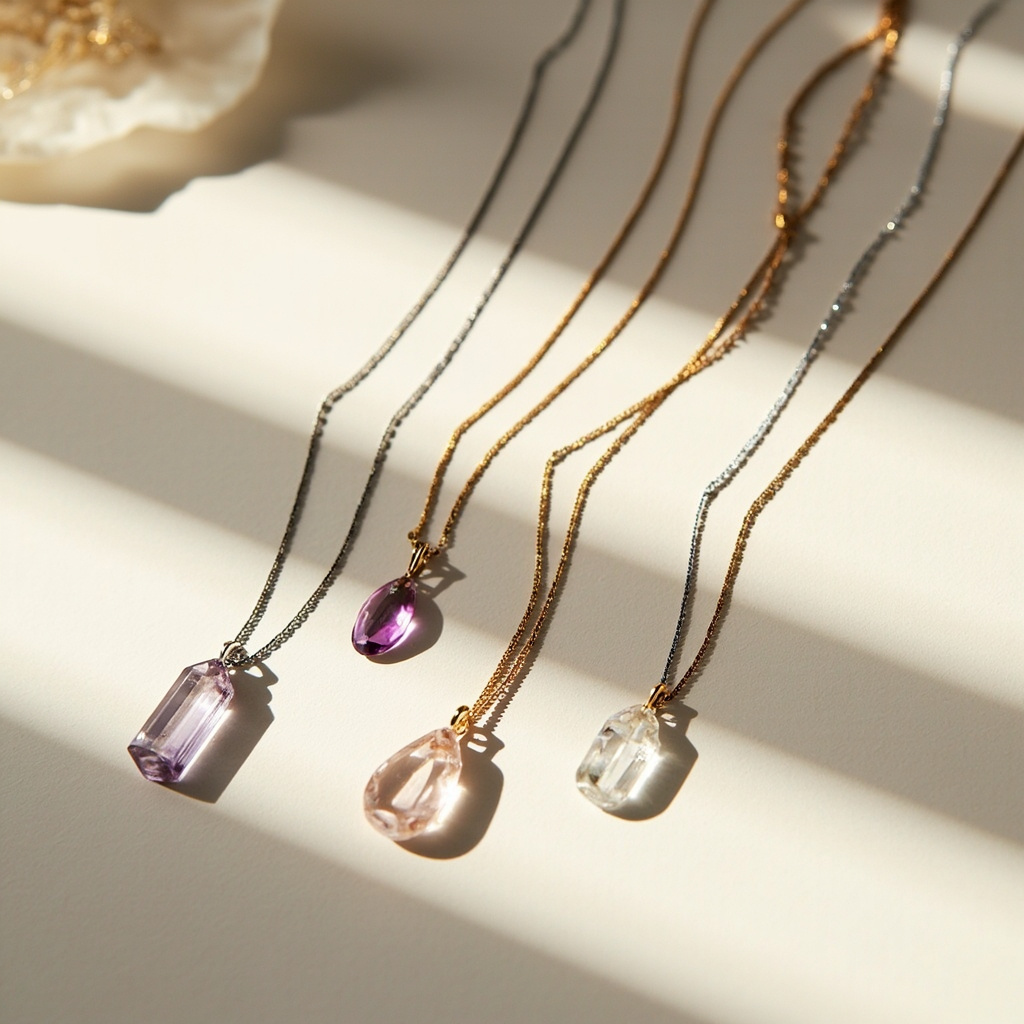
Understanding the variety of crystal shapes and cuts is essential before making a selection. Round, oval, and pear shaped pendants each reflect light differently, influencing the overall sparkle and visual weight of the layering scheme. For a subtle, refined effect, a faceted round crystal can add gentle shimmer without overwhelming adjacent necklaces, whereas a marquise or trillion cut creates a bold statement that may dominate the composition if the surrounding strands are delicate. By aligning the pendant’s geometry with the overall aesthetic, the wearer can achieve a balanced, cohesive look.
The size of the crystal pendant must be proportional to both the length of the chain it hangs on and the other necklaces in the stack. A pendant that is too large can crowd shorter necklaces, making the arrangement feel cluttered, while a tiny crystal may get lost among longer, chunkier strands. Aim for a pendant whose width roughly matches the diameter of the beads or links used in the other layers, ensuring visual continuity and preventing one element from overshadowing the others.
When integrating a crystal pendant into a layered configuration, the choice of metal type becomes a key coordinating factor. Gold, silver, rose gold, and brass each bring a distinct warmth or coolness that can either complement or clash with the crystal’s hue. A clear quartz crystal, for instance, looks stunning against warm gold, enhancing the metal’s glow, while a sapphire tinted crystal may appear richer against cool sterling silver. Matching the metal finish of the pendant to the chains and charms in the rest of the stack creates a seamless flow across the neckline.
Neckline compatibility is another crucial consideration when positioning the pendant. High necklines such as turtlenecks benefit from a longer chain that allows the crystal to rest at the chest, while V necklines pair well with shorter chains that keep the pendant